Every few months, someone shares a study, a supplement, or a folk remedy, and someone else replies with the same line: “if it really worked, there’d be clinical trials.” It sounds like a mic-drop. It’s actually one of the most misunderstood sentences in health media, because it treats the absence of a $1 billion trial as evidence about biology, when it’s really evidence about patent law and return on investment.
This isn’t a conspiracy story. Nobody needs to be hiding a cure in a vault. The explanation is duller and, honestly, more useful: large clinical trials are built to protect an investment, and a huge number of natural substances are legally incapable of generating the kind of investment that gets protected. Once you understand why, you stop asking the wrong question (“why doesn’t science study this?”) and start asking the right ones (“what does the evidence we actually have show, and what would it take to get more?”).
The Question Everyone Asks, and the One Nobody Does
“Show me the clinical trial” is a reasonable request. But it skips a prior question that almost never gets asked out loud: who would pay for it, and what would they get back?
A Phase 3 clinical trial isn’t a science fair project. It’s a multi-year, multi-site operation involving hundreds or thousands of patients, independent monitoring boards, statisticians, regulatory submissions, and years of follow-up. Nobody funds that out of curiosity. Companies fund it because, if the drug works, they get a government-granted exclusivity period during which no one else can legally sell the same thing. That exclusivity is what turns a trial from an expense into an investment.
Take that exclusivity away, and the math collapses. This is the entire story of why so many natural substances stay in a permanent evidence gray zone: not because they were tested and failed, and not because they were proven and suppressed, but because the trial that would settle the question was never economically rational to run in the first place.
It’s Not a Science Problem. It’s a Patent Problem.
U.S. patent law has a doctrine called the “product of nature” exception. It sounds obscure, but it quietly shapes almost the entire natural-health industry. The short version: you cannot patent something that already exists in nature, no matter how useful it is. You can only patent something you’ve meaningfully changed.
This isn’t a fringe legal theory. It’s been tested at the U.S. Supreme Court multiple times, and the pattern is remarkably consistent:
- Funk Bros. Seed Co. v. Kalo Inoculant Co. (1948) — the Court rejected a patent on a mixed bacterial inoculant because combining naturally occurring bacteria, without changing their properties, wasn’t a human invention. The bacteria did in the mixture exactly what they did in nature.
- Diamond v. Chakrabarty (1980) — on the flip side, the Court allowed a patent on a genetically engineered bacterium that could break down crude oil, because it did not exist in nature and was “markedly different” from anything nature produced. This case is the reason genetically modified organisms and synthetic drug analogs can be patented.
- Association for Molecular Pathology v. Myriad Genetics (2013) — the Court struck down patents on isolated human BRCA genes, using what’s now nicknamed the “magic microscope” test: if a powerful-enough microscope could find your patented invention already sitting inside a natural sample, it isn’t an invention. Myriad could patent the lab process it invented and the synthetic DNA it created, but not the gene itself.
- ChromaDex, Inc. v. Elysium Health, Inc. (Fed. Cir., 2023) — a more recent case involving nicotinamide riboside (a compound found in milk), where the court again applied product-of-nature reasoning to isolated natural compounds.
The through-line across nearly 80 years of case law is the same: unmodified natural substances — a mineral, a plant compound, a mixture of things bacteria or plants already make — are, as a rule, not patentable. Something like zeolite, a naturally occurring mineral that’s been mined out of volcanic rock for thousands of years, or DMSO, a compound derived from wood pulp that’s been sold as an industrial solvent since the 1950s, cannot be locked up the way a new synthetic molecule can. Anyone can source it, process it to the same purity standard, and sell it. There’s no 20-year window where one company gets to be the only legal seller.
What a Clinical Trial Actually Costs
Here’s where the incentive problem becomes concrete. Estimates for the full cost of bringing one new drug through clinical development vary wildly depending on who’s counting and what they include, and it’s worth being honest about that range rather than picking whichever number sounds most dramatic:
- The Tufts Center for the Study of Drug Development, in industry-funded research, has put the figure as high as $2.6–2.9 billion per approved drug, once you factor in the cost of capital and the many candidate drugs that fail along the way.
- An independent 2020 study published in JAMA Internal Medicine, using publicly disclosed clinical-trial data for 63 approved drugs, put the median cost closer to $985 million and the average around $1.3 billion — roughly half the Tufts estimate.
- Critics on both sides note the same problem: pharmaceutical companies don’t publish their actual R&D ledgers, so every estimate involves assumptions, and industry-funded studies tend to produce higher numbers than independently funded ones.
Even taking the lowest credible estimate, you’re looking at roughly a billion dollars to get one substance through the FDA approval pipeline. Nobody — not a supplement brand, not a university lab, not a nonprofit — is going to spend that on a mineral or a compound that any competitor could start selling next week if the trial succeeds. That’s not a moral failing of the natural-health world. It’s the same rational calculation a bank makes before deciding whether to lend money against an asset it can’t repossess.
The Workaround the Pharmaceutical Industry Actually Uses
It’s worth noticing what companies do when they want to study something they can’t fully own. The industry calls it “evergreening”: take a compound close to losing patent protection, make a small but legally sufficient modification — an isolated single-isomer version, a new delivery mechanism, a slow-release coating — and file a new patent on the modified version. AstraZeneca’s shift from Prilosec (omeprazole) to Nexium (esomeprazole, the isolated single isomer of the same molecule) is the textbook example. It’s not that the modification was scientifically meaningless; it’s that the patent, not the biology, was the point of the redesign.
This is the pattern to watch for across the entire industry: research funding follows patentability, not the other way around. A substance doesn’t get ignored because it failed a trial. Most of the time, it gets ignored because nobody could patent the trial’s result.
So What Does “No Large Clinical Trials” Actually Prove?
Here’s the part that gets skipped by both sides of this argument, and it’s the most important paragraph in this article: the absence of large-scale clinical trials is not evidence that something works, and it is not evidence that it doesn’t. It’s evidence that the specific, extremely expensive type of study designed to win FDA approval for a patentable product was never run. That’s it. That’s the whole fact.
Anyone telling you “there are no clinical trials, so it definitely doesn’t work” is smuggling in an assumption: that the RCT-for-drug-approval pipeline is the only mechanism through which real information about a substance could ever be generated. It isn’t. It’s the gold standard for one specific job — proving a new patentable drug is safe and effective enough for population-wide prescription. It was never designed as, and was never meant to be, the only valid form of human knowledge about a substance.
At the same time, anyone telling you “Big Pharma is hiding the cure” is making a claim this article deliberately isn’t making. We’re not asserting that zeolite, DMSO, or any other non-patentable substance is a proven treatment for any condition — we’re explaining why the specific kind of proof people demand was structurally unlikely to exist in the first place, and why that gap shouldn’t be mistaken for a verdict.
How to Actually Evaluate a Non-Patentable Remedy
If the billion-dollar trial isn’t coming, what’s actually left to evaluate a claim on? More than people assume, if you know where to look:
- Mechanism plausibility. Is there a coherent, testable explanation for how the substance would do what it’s claimed to do, and is that mechanism supported by basic chemistry or biology research (which is far cheaper to fund than a Phase 3 trial and often does get done on natural compounds at the university level)?
- Small independent and university-funded studies. These won’t have the statistical power of a 3,000-patient industry trial, but they’re real data points, not zero. The honest approach is to weigh them as preliminary evidence, not proof, and to watch whether findings replicate across multiple small studies rather than resting on one.
- Long history of documented use. Not proof of efficacy on its own, but relevant to safety in particular. A compound used industrially or medicinally for 70+ years (like DMSO) or a mineral consumed by humans for centuries (like zeolite in traditional use) has generated real-world safety information even without a formal trial program.
- Toxicology and safety data, which is often studied even when efficacy isn’t, because regulatory bodies and industrial users care about safety independent of medical claims.
- Purity, sourcing, and manufacturing standards. This is arguably the single most important factor for a non-patentable natural product, and it’s the one most within your control as a buyer — a mineral or compound that isn’t tested for contamination is a real risk regardless of what the underlying substance can or can’t do.
None of this replaces a clinical trial. It’s a different, more effortful kind of due diligence — one that acknowledges the limits of the evidence honestly instead of rounding a legal and financial gap up to “proven” or down to “fake.”
Where This Shows Up in What We Cover
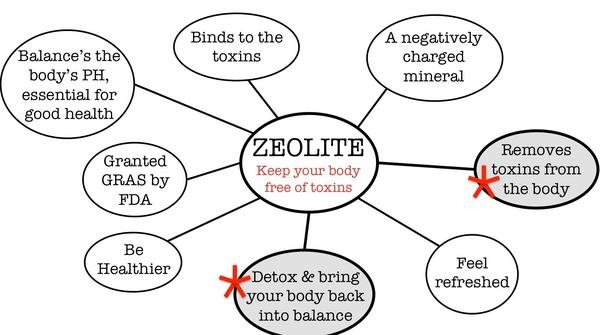
This is exactly the gap we try to be upfront about across this site. Our zeolite supplement comparison guide and our zeolite safety and purity guide spend most of their word count on sourcing, third-party testing, and contamination risk — not because we’re dodging the efficacy question, but because purity and sourcing are the parts of this equation that are actually verifiable right now, while efficacy for a non-patentable mineral sits in the evidence gray zone this article just walked through.
The same logic applies to our DMSO guide: DMSO has a genuinely unusual regulatory history (one FDA-approved use, decades of off-label and veterinary use, and a research pipeline that stalled for reasons that have as much to do with patent economics as with the compound itself), and we try to lay out what’s actually documented versus what’s anecdotal, rather than pretending the picture is cleaner than it is.
If you’re weighing a structured detox approach and want to see how we personally combine sourcing standards with a practical protocol, our detox protocol page walks through the specific products and process we use.
The Bottom Line
“Where are the clinical trials?” is a fair question about evidence quality. It stops being a fair question the moment it’s used as a mic-drop against anything that happens to be a naturally occurring substance, because it ignores the actual, well-documented legal and financial reason those trials are so rare: you cannot patent a rock, a plant compound, or a molecule nature already made, and nobody spends a billion-plus dollars on research they can’t exclusively profit from.
That’s not a loophole or a scandal. It’s just how the incentive structure behind modern drug development actually works — and understanding it is the difference between dismissing something reflexively, believing something uncritically, and actually knowing what you do and don’t know.