“Health care” is a strange name for a system that spends 97 cents of every dollar on treating people after they’re already sick. In 2018, preventive care made up just 2.9% of total U.S. health spending — and that share has been shrinking, not growing, down from 3.7% back in 2000. Meanwhile, in 2015, only 8% of U.S. adults over 35 received all the recommended preventive services appropriate for their age and risk, and nearly 5% received none at all.
Those aren’t fringe numbers from an activist pamphlet. They’re from the Peterson-KFF Health System Tracker and a peer-reviewed CDC analysis. And they point to something most people sense but rarely say out loud: the system isn’t failing to prevent disease. It was never built to.
“Sick Care” Isn’t a Slur. It’s a Description.
People roll their eyes at the phrase “sick care instead of health care” because it sounds like a bumper sticker. But strip away the cynicism and it’s just an accurate description of how the money actually flows. A system built around health would be paid to keep you well. The system we have is paid, overwhelmingly, to do something to you after you’re already unwell — a visit, a test, a procedure, a prescription. That’s not a moral judgment on any individual doctor. It’s a description of the billing structure every doctor in that system has to operate inside.
How the Money Actually Moves
Most U.S. medical care is still paid for under a model called fee-for-service. Every office visit, test, scan, and procedure is tied to a specific billing code, and the system reimburses providers based on the volume and complexity of services delivered — not on whether the patient stays healthy over the next five years. A cardiologist gets paid for a stent. There’s no comparably sized billing code for “spent 45 minutes convincing a patient to change their diet, and it worked.”
This creates a structural mismatch that has nothing to do with any individual physician’s intentions:
- Volume beats time. Primary care physicians are often scheduled in 10-15 minute increments, because the reimbursement per visit is relatively low and margin depends on seeing enough patients per day. That’s not enough time to meaningfully coach someone through a diet, sleep, or stress overhaul — the things that actually drive most chronic disease.
- Prevention has a longer payback period than the insurance relationship. The insurer paying for a diabetes-prevention program today often isn’t the one who reaps the financial benefit in ten years, because people switch health plans when they switch jobs. There’s little incentive for any single payer to invest heavily in prevention whose payoff another company will collect.
- Billing codes reward intervention, not maintenance. The entire coding system (CPT codes) that determines reimbursement was built around procedures and diagnoses. “Continues to be healthy” isn’t a billable event.
None of this requires a conspiracy. It requires exactly what economists always assume: individuals and institutions respond rationally to the incentives in front of them. Hospitals need revenue to operate; revenue comes overwhelmingly from treating illness; so treatment, not prevention, becomes the center of gravity for the entire system, from how medical schools are structured to how hospitals are financed to what gets covered by insurance.
The Slow Shift Toward Value-Based Care (and Why It’s Taking So Long)
To be fair, this isn’t a total secret inside the industry — it’s a well-known problem policymakers have been trying to fix for over a decade. “Value-based care” models pay providers based on patient outcomes rather than volume of services, and accountable care organizations (ACOs) are explicitly designed to reward keeping a defined patient population healthier. Medicare has been pushing pilot programs in this direction since the Affordable Care Act.
But the transition has been slow and uneven, for a straightforward reason: it requires unwinding decades of infrastructure — billing systems, hospital revenue models, medical education, insurance contracts — that were all built around fee-for-service. You can’t flip a switch on a $4.5 trillion industry. The Commonwealth Fund and other health policy researchers have documented this as an ongoing, only partially completed transition, not a solved problem.
What This Doesn’t Mean
It’s worth being precise here, because this argument gets misused in both directions. This is not an argument that doctors are greedy, that modern medicine doesn’t work, or that you should skip evidence-based treatment in favor of unproven alternatives. Emergency medicine, surgery, infectious disease treatment, and acute care are genuine triumphs, and the fee-for-service system is very good at funding exactly the kind of fast, dramatic interventions those situations require.
The argument is narrower and, frankly, more useful than “the system is broken”: a payment structure built around billable interventions will always underinvest in the slow, unglamorous, hard-to-bill work of keeping people from getting sick in the first place — regardless of how much any individual doctor cares about prevention. Structure shapes outcomes independent of intent.
What Actually Falls Outside the Sick-Care Loop
Once you see the incentive structure clearly, it explains a pattern a lot of people notice but can’t quite articulate: most of what actually moves the needle on long-term health — sleep, diet, stress management, environmental exposures, basic detoxification and lifestyle habits — sits almost entirely outside the billable, insurance-reimbursed system. Not because it doesn’t matter, but because there’s no CPT code for it.
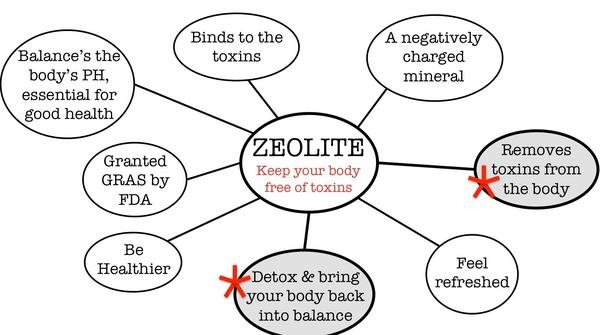
That’s a big part of why this kind of self-directed, preventive-minded content exists on sites like this one. Our detox protocol isn’t positioned as a replacement for medical care — it’s the kind of proactive, outside-the-billing-system practice that the sick-care model has no financial reason to ever recommend to you, whether or not it happens to be useful. The same logic runs through why substances like zeolite and DMSO stay outside mainstream medical guidance in the first place — a point covered in more depth in our piece on why non-patentable remedies rarely get large clinical trials. Two different structural gaps (patent economics and reimbursement economics), pointing at the same blind spot: things that don’t generate a bill or a patent tend to get ignored by the institutions built around bills and patents, regardless of merit.
What To Actually Do With This
Understanding the incentive structure isn’t a reason to distrust your doctor or skip care you need. It’s a reason to be a more active participant instead of a passive one:
- Ask for the preventive services you’re actually entitled to. Most insurance plans cover annual wellness visits, screenings, and basic labs at no cost — use them, since the system’s underinvestment in prevention doesn’t mean the tools aren’t available, just that no one is going to chase you down to remind you.
- Treat a 15-minute visit as a checkpoint, not a strategy session. If your real goal is prevention and lifestyle change, that work mostly has to happen between visits, on your own initiative — the system’s time constraints aren’t a reflection of what matters, just what’s billable.
- Track your own numbers over time. Blood pressure, weight, basic labs, sleep — trends you notice yourself often surface issues years before a once-a-year visit would catch them.
- Look outside the billing system for the maintenance work. Diet, sleep, movement, stress, and environmental exposures are the highest-leverage levers for long-term health, and none of them require a CPT code to matter.
The Bottom Line
“Sick care” isn’t a cynical talking point. It’s a fair description of a system where 97% of spending goes to treatment and less than one in ten adults gets the preventive care they’re supposed to. That’s not because prevention doesn’t work or because doctors don’t believe in it — it’s because the entire financial architecture of American medicine was built to pay for intervention, not maintenance. Knowing that doesn’t mean opting out of modern medicine. It means understanding that if you want to stay out of the sick-care loop in the first place, a lot of that work is going to fall on you, because it was never going to fall on a system that only gets paid once you’re already in it.