Every page ranking for “zeolite detox” is trying to sell you zeolite. This one isn’t. Here’s what zeolite actually is, what the evidence genuinely supports, the safety issues sellers never mention, and how to use it if you decide to — written by someone with no product to move.
What Is Zeolite, Exactly?
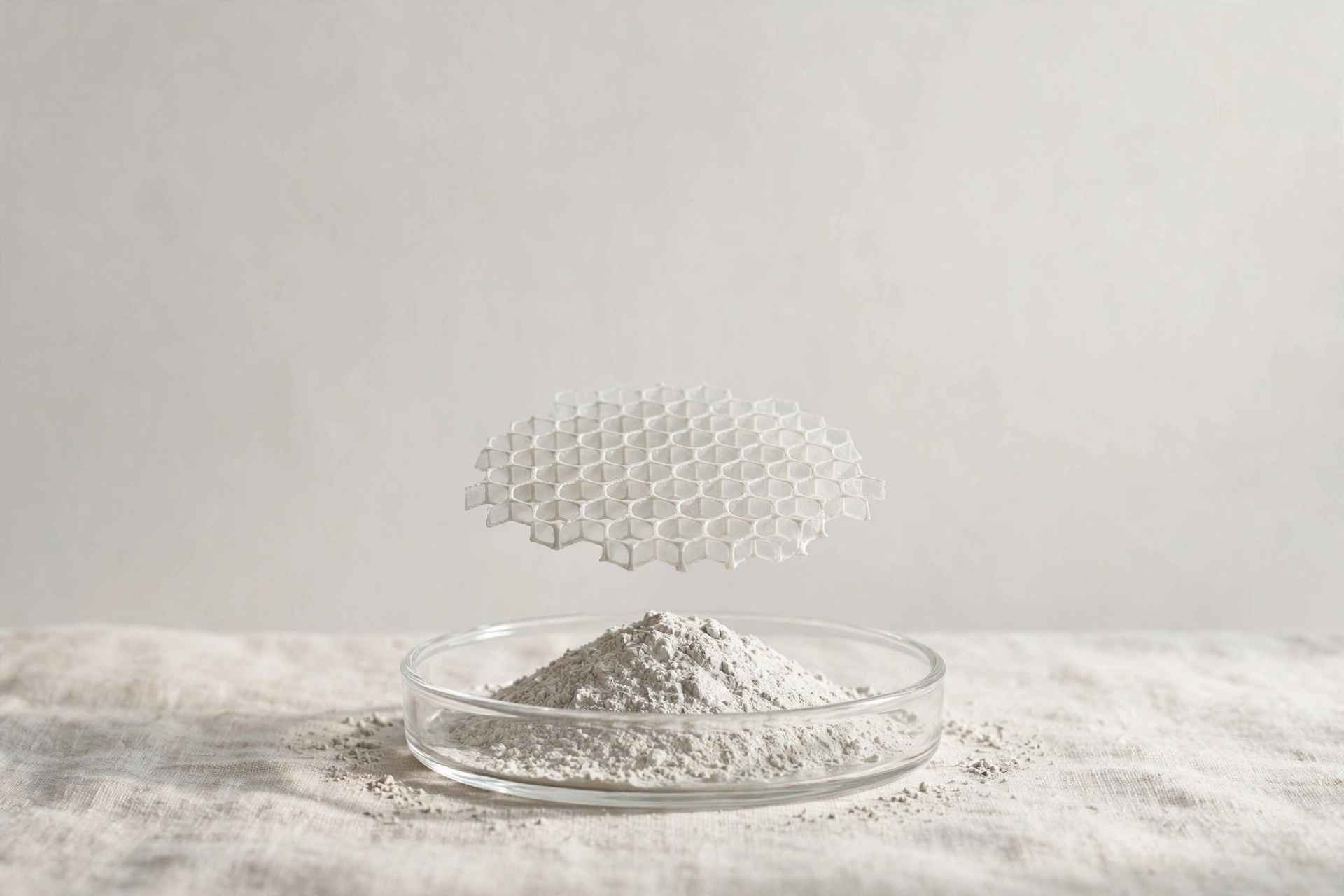
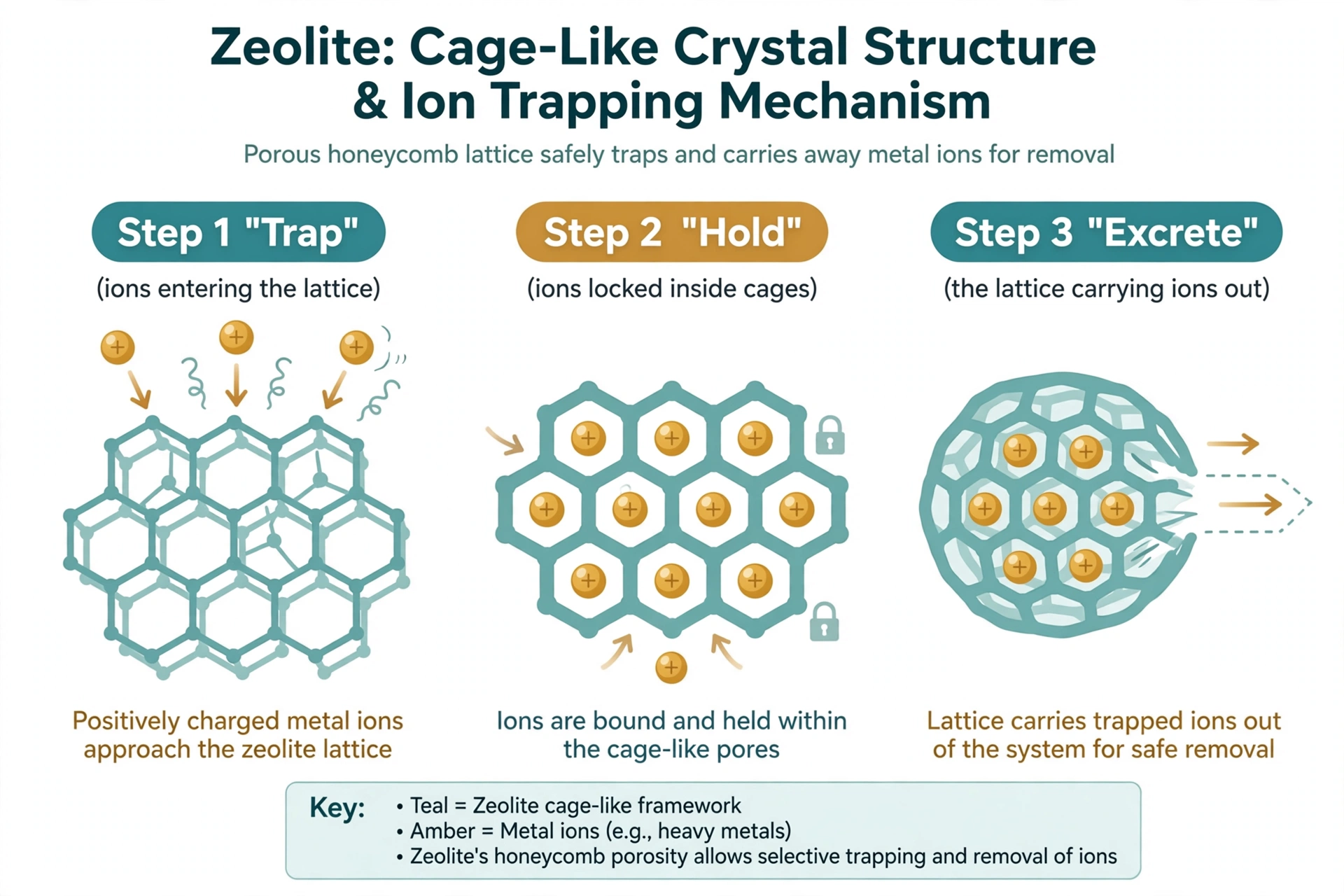
Zeolite is a volcanic mineral — formed when volcanic ash meets alkaline water over thousands of years. Chemically, it’s an aluminosilicate with a cage-like crystal structure: a rigid honeycomb lattice full of microscopic channels and cavities.
That structure is the entire story. The cages carry a negative charge, which means they attract and hold positively charged ions — including certain heavy metals. When you ingest clinoptilolite (the zeolite type used in supplements), it passes through your digestive tract, and along the way its cages can swap the harmless minerals they arrive with (sodium, potassium, calcium) for heavier metals they encounter. Then you excrete it. That’s cation exchange, in plain English: a molecular swap meet, not magic.
Clinoptilolite vs. Other Zeolite Types
Not all zeolites are the same, and this distinction matters more than anything else on this page.
Clinoptilolite is the zeolite used in supplements. It’s the most studied, the most abundant, and the form with actual human safety data behind it. When a label just says “zeolite,” clinoptilolite is what you want it to mean — but check, because not every product specifies.
Erionite is a fibrous zeolite classified as a known human carcinogen (IARC Group 1), linked to mesothelioma in the same way asbestos is. It is never, ever the supplement form — but its existence is why “third-party tested” and mineral sourcing matter. A reputable product verifies what it doesn’t contain, not just what it does.
If a zeolite product can’t tell you which zeolite it contains, don’t buy it.
How Zeolite Is Supposed to Work
The mechanism is straightforward and well-understood in chemistry, even where the health applications are debated:
- You ingest clinoptilolite powder, capsules, or liquid suspension.
- It travels through your digestive tract without being absorbed into your bloodstream (it’s not digested — it passes through).
- Inside the gut, its negatively charged cages attract positively charged ions — including lead, cadmium, mercury, and ammonium.
- It holds them in the cage structure and carries them out in your stool.
Two things to note. First, this is a gut-level process — zeolite doesn’t circulate through your body hunting toxins. Claims about it “crossing the blood-brain barrier” or cleansing your organs have no mechanism behind them; the mineral stays in the digestive tract. Second, the exchange isn’t perfectly selective. The same cages that grab lead can also grab beneficial minerals, which is why timing, dosage, and not taking it alongside your multivitamin matter. For a deeper look at what the binding chemistry genuinely supports — and the vendor claims it can’t — see our deep-dive on how zeolite binds heavy metals.
What the Evidence Actually Says
This is the section no seller will write. Every claim below is graded honestly.
What’s genuinely studied
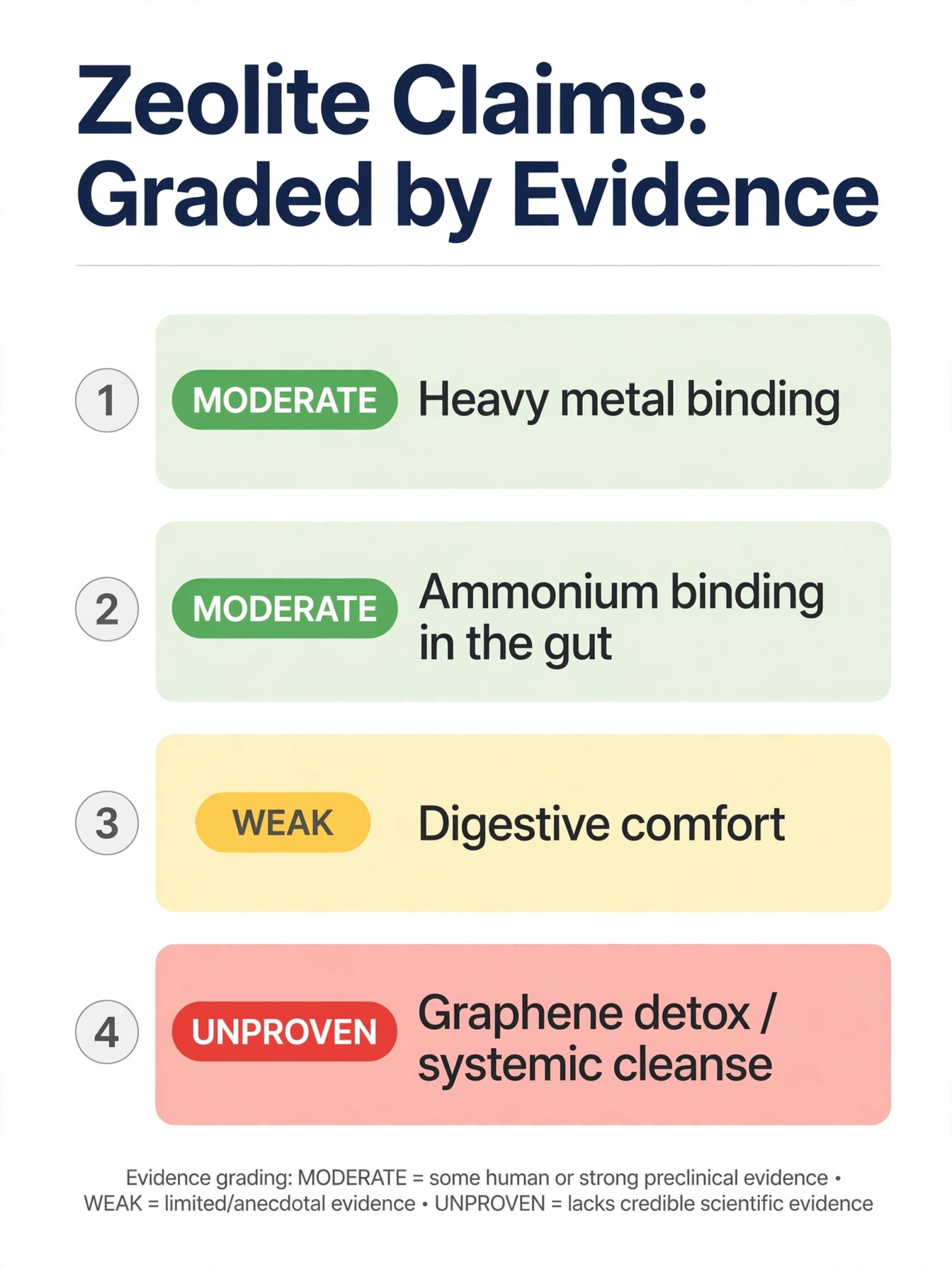
Heavy-metal binding. The strongest evidence. Clinoptilolite’s ability to bind heavy metals is established chemistry, demonstrated in industrial and environmental applications for decades — including its famous use in radioactive cleanup after Chernobyl and Fukushima, where zeolites were deployed to capture radioactive cesium and strontium from contaminated water. That’s industrial use, not proof that a supplement detoxes your body — but it confirms the binding mechanism is real, not theoretical. Small human pilot trials on clinoptilolite and heavy-metal excretion exist and show signals in the right direction, though they’re small and more research is needed.
Ammonium binding. Well-documented, including in animal agriculture where clinoptilolite is an approved feed additive (EFSA has issued opinions on its use). The gut-ammonia angle is one of the more plausible digestive benefits.
What’s plausible but thin
Gut and digestive effects. Mostly animal and in-vitro data. The logic is sound — binding irritants in the gut should calm the gut — but human trial data is sparse.
Antioxidant claims. Largely extrapolated from the free-radical chemistry rather than demonstrated in humans taking supplements.
What’s speculation
Graphene oxide detox. No human data. The claim exploded in alternative health circles, but there is no clinical evidence that zeolite binds or removes graphene oxide from the body. If this is why you’re here, know that you’re operating on theory, not data.
Virus binding, “systemic cleanse,” organ detox. No human evidence. Remember: zeolite stays in the gut. Anything claiming whole-body detoxification through a gut-bound mineral is skipping several logical steps.
The evidence at a glance
| Claim | Evidence grade |
|---|---|
| Binds heavy metals (chemistry confirmed; small human trials positive) | Moderate |
| Binds ammonium in the gut | Moderate |
| Digestive/gut comfort | Weak (mostly animal data) |
| Antioxidant effects in humans | Weak |
| Graphene oxide detox | Unproven (no human data) |
| Systemic/organ “cleanse” | Unproven (no plausible mechanism) |
Zeolite Forms: Powder, Capsules, Drops & Sprays
Powder is the original and most economical form — typically micronized clinoptilolite you mix into water. Most control over dose, worst taste and texture (chalky, gritty). Typical label servings run around 1–2 teaspoons, but there is no established official dose — every number on the market comes from manufacturers, not regulators.
Capsules are powder in a pill. Convenient, tasteless, more expensive per gram. Good if you can’t stand the powder texture.
Drops and sprays (liquid suspensions) are the premium-priced convenience form. Same mineral, smaller typical serving sizes, easier to take consistently. You’re paying for convenience, not a different mechanism.
No form is inherently superior at binding — it’s the same clinoptilolite. Choose based on what you’ll actually take consistently.
How to Use Zeolite: A Practical Guide
Dosage
There is no established official dose for zeolite supplements — no RDA, no FDA monograph. Typical manufacturer guidance clusters around 1–2 teaspoons of powder daily or the equivalent in capsules/drops, usually split into two servings. Start at the low end. More is not better with binders; the goal is steady, gentle binding, not a heroic purge.
Timing (this matters)
Take zeolite away from medications and other supplements — at least 2 hours apart, ideally more. The absorption interference is real: the same cages that grab heavy metals will happily grab your prescription drugs and your expensive vitamins. Morning zeolite, evening everything else (or vice versa) is the standard approach.
Water, cycling, and duration
Drink more water than usual — binders plus low water intake equals constipation, the most common complaint. Most protocols run 30–90 days followed by a break, though this cycling convention comes from practitioner tradition rather than clinical trials. If you’re using it for general gut maintenance rather than a specific concern, shorter cycles with breaks make more sense than indefinite daily use.
Safety: What Sellers Don’t Tell You
Contamination in cheap products. Think about it: zeolite binds heavy metals. A zeolite mined from contaminated ground arrives pre-loaded with exactly what you’re trying to remove. This is why third-party testing with a certificate of analysis (CoA) isn’t a luxury — it’s the entire ballgame. Untested zeolite from an unknown source can do the opposite of what you bought it for.
Erionite. Covered above, worth repeating: the supplement must be clinoptilolite, verified erionite-free. Reputable sellers state this explicitly.
Don’t breathe the powder. Fine mineral dust irritates lungs — animal studies show lung inflammation from inhaled zeolite dust. Mix powder carefully, don’t snort the cloud that puffs up when you open the jar.
Medication interactions. The 2-hour separation rule exists because zeolite can reduce absorption of oral medications. If you take prescription drugs — especially thyroid medication, which is notoriously absorption-sensitive — talk to your doctor or pharmacist first.
Pregnancy, breastfeeding, kids. No safety data. The standard guidance applies: don’t experiment on yourself when someone else shares the consequences. Talk to a clinician.
Dehydration and constipation. The most common real-world side effect, entirely preventable with adequate water.
For the full deep-dive on vetting products, see our zeolite safety buyer’s guide.
Zeolite vs. Activated Charcoal vs. Bentonite Clay vs. Chlorella
The four binders people actually compare, honestly compared:
| Zeolite (clinoptilolite) | Activated charcoal | Bentonite clay | Chlorella | |
|---|---|---|---|---|
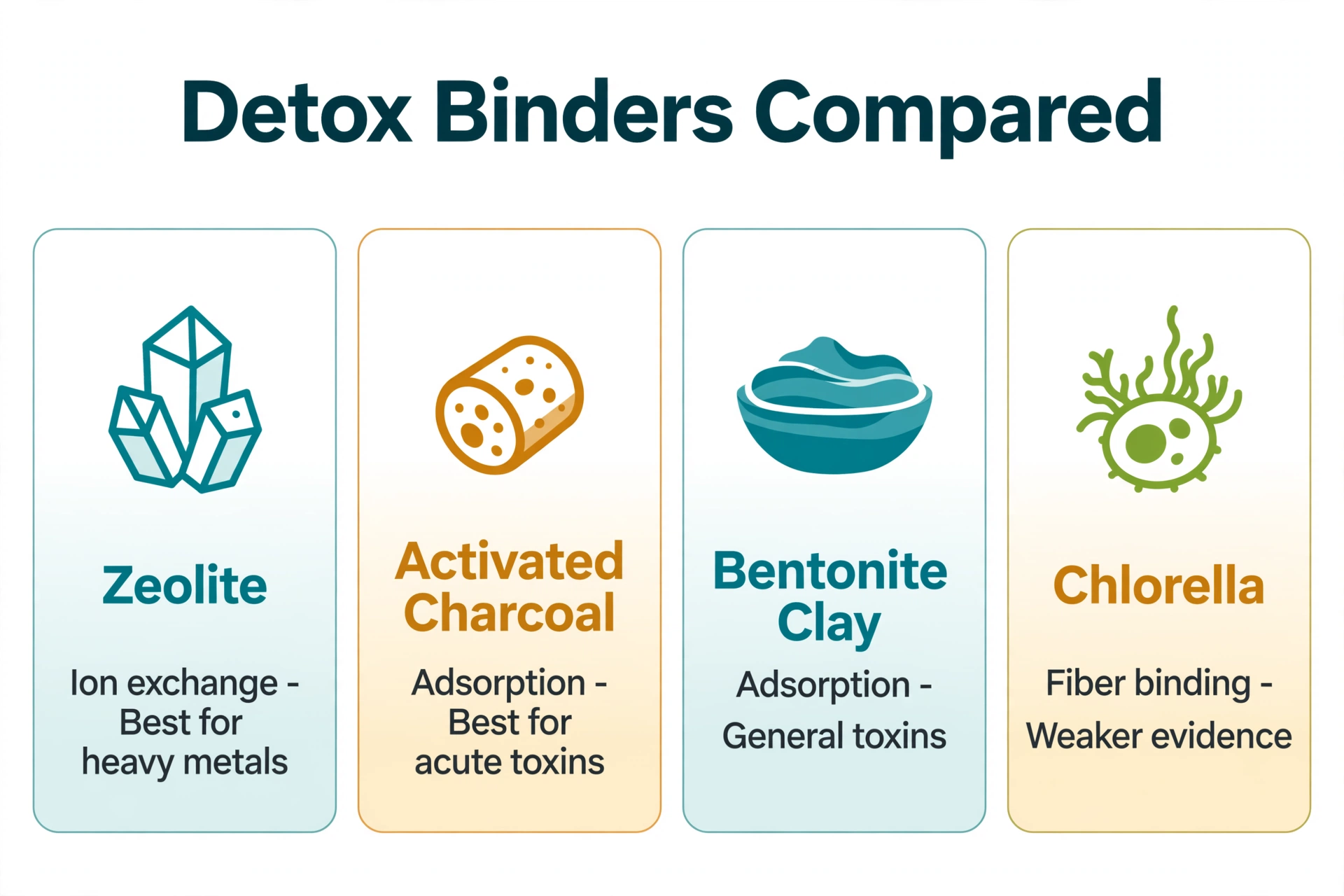
| Mechanism | Cation exchange in crystal cages | Adsorption onto huge surface area | Adsorption + ion exchange | Chlorophyll + fiber binding |
| Binds best | Heavy metals, ammonium | Toxins, gases, some drugs (acute) | General toxins, some metals | Heavy metals (weaker evidence) |
| Typical dose | 1–2 tsp powder / equivalent | 1–2 capsules as needed | 1 tsp in water | 3–5 g tablets/powder |
| Main downside | Contamination risk if untested; med interactions | Binds medications aggressively; constipation | Similar contamination concerns; messy | Algae sourcing quality varies; modest evidence |
No single winner — they bind different things by different mechanisms. Charcoal is the acute-use king (it’s what emergency rooms use). Zeolite is the daily-driver candidate for metals, if it’s clean and properly timed. For the full head-to-head, see our binder comparison.
How to Choose a Zeolite Product: The Label Checklist
Run every product through this before buying:
- Clinoptilolite specified — not just “zeolite” or “volcanic mineral”
- Micronized — finer particles mean more surface area (this is a legitimate quality marker)
- Third-party tested with a CoA — heavy metals, microbial, and erionite-free verification
- Erionite-free statement — explicitly, not assumed
- No wild disease claims on the label — “treats autism/cancer/COVID” on the packaging is a red flag about the company, not a selling point. Serious manufacturers don’t claim this.
Our current product comparisons: best zeolite supplements 2026 and top 3 zeolite detox supplements.
Frequently Asked Questions
What is a zeolite detox?
Taking clinoptilolite (a volcanic mineral) orally so its cage-like structure binds heavy metals and ammonium in your digestive tract, carrying them out in stool. It’s a gut-level process — the mineral isn’t absorbed into your bloodstream.
Does zeolite actually remove heavy metals from the body?
The binding chemistry is well-established and small human trials show positive signals, but the trials are small. “Removes heavy metals” is fair with the caveat that large-scale human proof is still limited. It binds metals in the gut; claims beyond that outrun the data.
How do you take zeolite — powder, capsules, or drops?
Powder mixed in water is the most economical; capsules are the most convenient; drops/sprays are premium-priced convenience. Same mineral, same mechanism — pick the form you’ll actually take consistently, away from medications.
Is zeolite safe? What are the side effects?
Clinoptilolite has a reasonable safety profile in the available data. Real risks: heavy-metal contamination in untested products, medication absorption interference, lung irritation from inhaled powder, and constipation without enough water. No safety data for pregnancy or children.
Will zeolite deplete my good minerals too?
It can bind beneficial minerals as well as harmful ones — that’s the nature of ion exchange. This is why you take it away from other supplements and don’t use it indefinitely without breaks.
How long should you take zeolite for?
Most protocols run 30–90 days followed by a break. This comes from practitioner convention, not clinical trials. For general maintenance, shorter cycles with breaks are more sensible than endless daily use.
What’s the difference between zeolite and activated charcoal?
Different mechanisms (ion exchange vs. adsorption), different strengths (zeolite for metals/ammonium with daily use; charcoal for acute toxin/gas binding). Charcoal binds medications more aggressively. They complement rather than replace each other.
What should I look for when buying a zeolite supplement?
Clinoptilolite specified, micronized, third-party tested with a certificate of analysis, explicit erionite-free statement, and no disease-cure claims on the label.
What is a zeolite detox?
Taking clinoptilolite (a volcanic mineral) orally so its cage-like structure binds heavy metals and ammonium in your digestive tract, carrying them out in stool. It’s a gut-level process — the mineral isn’t absorbed into your bloodstream.
Does zeolite actually remove heavy metals from the body?
The binding chemistry is well-established and small human trials show positive signals, but the trials are small. ‘Removes heavy metals’ is fair with the caveat that large-scale human proof is still limited. It binds metals in the gut; claims beyond that outrun the data.
How do you take zeolite — powder, capsules, or drops?
Powder mixed in water is the most economical; capsules are the most convenient; drops/sprays are premium-priced convenience. Same mineral, same mechanism — pick the form you’ll actually take consistently, away from medications.
Is zeolite safe? What are the side effects?
Clinoptilolite has a reasonable safety profile in the available data. Real risks: heavy-metal contamination in untested products, medication absorption interference, lung irritation from inhaled powder, and constipation without enough water. No safety data for pregnancy or children.
Will zeolite deplete my good minerals too?
It can bind beneficial minerals as well as harmful ones — that’s the nature of ion exchange. This is why you take it away from other supplements and don’t use it indefinitely without breaks.
How long should you take zeolite for?
Most protocols run 30–90 days followed by a break. This comes from practitioner convention, not clinical trials. For general maintenance, shorter cycles with breaks are more sensible than endless daily use.
What’s the difference between zeolite and activated charcoal?
Different mechanisms (ion exchange vs. adsorption), different strengths (zeolite for metals/ammonium with daily use; charcoal for acute toxin/gas binding). Charcoal binds medications more aggressively. They complement rather than replace each other.
What should I look for when buying a zeolite supplement?
Clinoptilolite specified, micronized, third-party tested with a certificate of analysis, explicit erionite-free statement, and no disease-cure claims on the label.
The Bottom Line
Zeolite is a real mineral with a real binding mechanism, modest-but-genuine human evidence for heavy-metal binding, and a safety profile that’s good if the product is clean and you time it away from medications. It’s not a systemic detox miracle, it doesn’t remove graphene oxide on any evidence, and the sellers dominating the search results won’t tell you any of this — because none of it helps them sell.
If you want a structured protocol rather than DIY, our zeolite detox protocol lays out the full approach step by step.
This guide is for educational purposes only and isn’t medical advice. Supplements affect everyone differently — talk to a qualified health professional before starting zeolite, especially if you’re pregnant, nursing, taking medication, or managing a medical condition.