Quick answer
- To dilute 99.9% DMSO, mix DMSO and distilled water by percentage: for 70%, use 7 parts DMSO to 3 parts water; for 50%, use equal parts.
- Always add DMSO to water slowly — the mix warms up as it combines.
- Use glass, clean dry skin, and pharmaceutical-grade DMSO. DMSO carries whatever is on your skin into your body.
- Patch-test lower strengths first, especially on the face.
DMSO (dimethyl sulfoxide) is usually sold at 99.9% purity, and almost nobody should put it on their skin at that strength. The most common question we get is simply: how do I dilute it? This guide gives you a dilution chart you can print, the exact method, and the mistakes that cause most bad experiences. If you are new to DMSO itself, start with our complete DMSO guide.
Why DMSO is diluted before use
Full-strength DMSO pulls water from the skin and commonly causes redness, itching, a burning feeling and dryness. Diluting it reduces that irritation while keeping its main property: it penetrates skin quickly. For context, the two DMSO-containing products the FDA has approved both use it at roughly half strength — Rimso-50 (50% DMSO, used inside the bladder for interstitial cystitis) and a prescription diclofenac topical solution that contains about 45.5% DMSO as its penetration enhancer.
DMSO dilution chart
Based on 99.9% DMSO and distilled water. Measurements are by volume — use a graduated glass cylinder or a glass measuring cup.
| Target strength | Ratio (DMSO : water) | For 100 mL | For 1 fl oz (30 mL) | Commonly used for |
|---|---|---|---|---|
| 90% | 9 : 1 | 90 mL + 10 mL | 27 mL + 3 mL | Thick skin (feet, heels) — experienced users only |
| 70% | 7 : 3 | 70 mL + 30 mL | 21 mL + 9 mL | Knees, back, larger joints |
| 60% | 3 : 2 | 60 mL + 40 mL | 18 mL + 12 mL | Arms, shoulders, hands |
| 50% | 1 : 1 | 50 mL + 50 mL | 15 mL + 15 mL | Starting strength; neck, thinner skin |
| 40% | 2 : 3 | 40 mL + 60 mL | 12 mL + 18 mL | Sensitive skin |
| 25% | 1 : 3 | 25 mL + 75 mL | 7.5 mL + 22.5 mL | Face — patch test first |
The “commonly used for” column reflects how strengths are typically discussed in DMSO literature and user communities, not medical dosing instructions.
How to dilute DMSO step by step
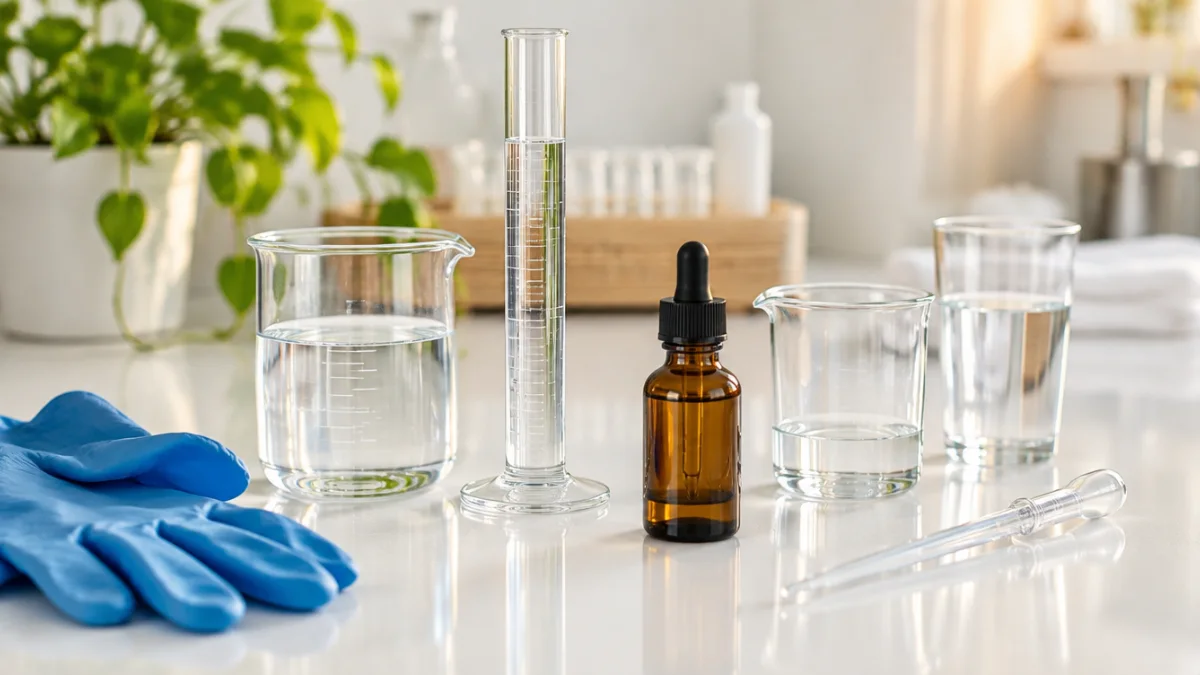
- Start with the right DMSO. Use pharmaceutical-grade or “99.9% pure, low-odor” DMSO sold for personal use — never industrial solvent grade.
- Use distilled water. Tap water adds minerals, chlorine and bacteria that DMSO can carry into the skin.
- Use glass. DMSO can dissolve some plastics and pull chemicals out of them. Glass cylinders, beakers or jars are ideal. If you must use plastic, HDPE (#2) and polypropylene (#5) are the most resistant.
- Pour the water in first, then add DMSO slowly. The mixture gets noticeably warm as it combines. Let it cool before using.
- Stir gently and label it. Write the strength and date on the bottle. Store sealed, away from light and heat. Pure DMSO freezes around 18.5°C (65°F); diluted mixtures freeze at much lower temperatures.
Diluting DMSO with aloe vera instead of water
Many people prefer pure aloe vera gel as the diluent because it soothes the skin and makes the mix easier to spread. Use the same ratios as the chart, but choose aloe that is 100% aloe with no added fragrance, dyes or preservatives you would not want absorbed — DMSO will carry those through the skin too. We compare both approaches in The Benefits of DMSO with Aloe Vera.
The 6 most common DMSO mistakes
- Applying to dirty or lotioned skin. Wash with plain water and let the skin dry fully first. Lotions, perfumes, sunscreen and soap residue can be carried into the body.
- Wearing latex gloves. DMSO can carry latex proteins and chemicals through. Use clean hands or nitrile gloves.
- Starting too strong. Begin at 50% or lower and only move up if your skin tolerates it.
- Using tap water or plastic containers. See above.
- Getting dressed too fast. Let it absorb for 20–30 minutes so dyes from clothing are not drawn into the skin.
- Not patch testing. Try a coin-sized area and wait 24 hours, especially for facial use.
What to expect: normal vs not normal
Normal: a garlic- or oyster-like taste and breath odor within minutes (DMSO is partly converted to dimethyl sulfide), mild warmth, mild temporary redness or itching.
Stop and seek advice: blistering, hives, swelling, difficulty breathing, or a reaction that worsens. Also talk to a doctor before using DMSO if you are pregnant or breastfeeding, have liver or kidney disease, or take blood thinners, sedatives, steroids or heart medication — DMSO can increase absorption of other substances.
For specific uses, see our deeper guides on DMSO for back pain and DMSO for the face.
Frequently asked questions
What is the ratio to dilute DMSO to 70%?
Mix 7 parts 99.9% DMSO with 3 parts distilled water — for example 70 mL DMSO and 30 mL water.
Can I dilute DMSO with tap water?
It is not recommended. Use distilled water, because DMSO can carry minerals, chlorine and microbes from tap water into the skin.
Why does DMSO get hot when mixed with water?
Mixing DMSO and water releases heat. Add DMSO slowly to the water and let the mixture cool before applying.
What strength DMSO should I use on my face?
Facial skin is thin and sensitive, so people typically start around 25% or lower and patch test first. Stop if irritation persists.
Does diluted DMSO go bad?
DMSO itself is stable. Diluted mixtures stored in sealed glass away from light keep well, but mixes made with aloe vera should be made in small batches because the aloe can spoil.
DMSO is not FDA-approved for most of the uses people discuss online. This article is for educational purposes only and is not medical advice. Talk with a qualified healthcare provider before using DMSO.