Short answer: for most healthy adults, purified clinoptilolite zeolite (the type used in reputable detox supplements) appears to be well tolerated in the small human studies that exist, with mild digestive upset being the most commonly reported issue. The bigger safety variable isn’t the mineral itself — it’s product quality. Raw zeolite ore can be contaminated with other minerals, and supplements aren’t reviewed by the FDA before they hit the shelf. This guide walks through what the research actually shows, the one contamination issue every buyer should understand, and exactly what to check before you buy. For our specific product picks, see our Zeolite Detox Protocol guide and full product comparison.
What the Human Research Actually Shows
Clinoptilolite is the specific zeolite mineral used in most detox supplements, and it’s also one of the more studied types. A handful of small published human studies have looked at daily doses in the range of roughly 6 to 9 grams, taken over periods from several weeks up to a few years in some longer-running observations, generally reporting it as well tolerated without serious adverse effects. That’s a genuinely encouraging safety signal — but it’s important to be honest about the limits of this research too: these are small studies, not the large randomized controlled trials that exist for pharmaceutical drugs, and it’s an area where more research would strengthen the picture considerably.
The Critical Distinction: Clinoptilolite vs. Erionite
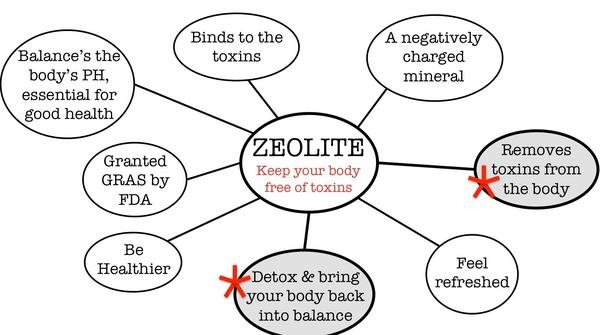
This is the single most important thing to understand about zeolite safety, and it rarely gets mentioned in product marketing. “Zeolite” is a family name for more than 40 different mineral structures — not one single substance. Clinoptilolite, the type used in supplements, has a cage-like structure that is not classified as a health hazard. Erionite, a different fibrous zeolite mineral, is a known carcinogen when inhaled and has been linked to mesothelioma in regions where it occurs naturally in the environment (most notably parts of Turkey). Erionite exposure risk comes primarily from inhaling dust in specific geological or occupational settings, not from swallowing a purified clinoptilolite supplement — but the distinction is exactly why sourcing and purity testing matter so much. A reputable supplement brand will be explicit that its product is clinoptilolite and will test for exactly this kind of mineral contamination, not just generic “purity.”
Does Zeolite Deplete Essential Minerals?
Because zeolite’s whole mechanism is binding to positively charged ions, it’s a fair question whether it also strips out minerals your body needs, like calcium, magnesium, and potassium. The available research is reassuring but not absolute: most studies have not found clinically meaningful mineral depletion at normal supplemental doses, though at least one longer-running observation noted copper levels dipping slightly below the normal range after several years of continuous use. The practical takeaway is that mineral depletion doesn’t appear to be a major short-term risk, but if you’re using zeolite continuously for months or years rather than in shorter rounds, it’s reasonable to ask your doctor about periodically checking your mineral levels, the same way you might with any long-term supplement regimen.
Where Does Supplement Zeolite Actually Come From?
Zeolite deposits form naturally when volcanic ash reacts with alkaline groundwater over long periods, and clinoptilolite deposits large enough to mine commercially exist in a number of countries, including the United States, parts of Europe, and Asia. Because it’s a mined mineral rather than a synthesized compound, quality can vary meaningfully by deposit and by how carefully the ore is processed and screened afterward — this is a big part of why sourcing transparency matters more here than it does for a lab-synthesized vitamin, where the input material is far more standardized from batch to batch. When a brand can tell you which deposit or region their zeolite comes from, that’s generally a good sign they’re paying attention to the supply chain rather than buying the cheapest bulk material available.
Common Side Effects
- Digestive changes: Bloating, gas, mild diarrhea, or constipation are the most frequently reported issues, especially in the first one to two weeks.
- Temporary “detox” symptoms: Some people report brief headaches or fatigue when starting, which typically resolve as the body adjusts.
- Rare allergic reactions: As with any mineral or supplement, individual sensitivity is possible, though uncommon.
Starting at a lower dose than the label maximum, and increasing gradually, is the most common way people avoid or minimize these effects.
Who Should Be Cautious or Avoid It
- Pregnant or breastfeeding women — safety data specific to pregnancy is essentially absent, so caution and a doctor’s input are warranted.
- People with kidney disease — the kidneys are involved in clearing what the body processes, so existing kidney impairment is a reason to check with a doctor first.
- Children — dosing research in children is limited; use should be guided by a pediatrician.
- Anyone on multiple prescription medications — see the drug interaction section below.
- Why Don’t Natural Remedies Have Clinical Trials? The Real Reason Isn’t Science
Drug Interactions and Timing
Because zeolite works by binding to charged particles in the digestive tract, it has the potential to bind to some medications too, including thyroid medication, certain cardiac drugs, and anticonvulsants, which could reduce how much of the drug your body actually absorbs. The standard precaution — the same one used for other binding supplements like activated charcoal or fiber — is to separate zeolite from any medication by at least two hours, and to loop in your doctor or pharmacist if you take medication daily.
Regulatory Status: What “FDA Approved” Actually Means Here
It’s worth being direct about this: clinoptilolite zeolite does not have FDA approval as a drug for treating any disease, and like all dietary supplements in the United States, zeolite products are not reviewed by the FDA for safety or effectiveness before they’re sold. Its more established regulatory approval is as an animal feed additive. That doesn’t mean a quality supplement can’t be a useful part of your routine — it means the responsibility for verifying quality falls more heavily on the brand’s own testing and transparency, and on you as the buyer, than it would with a regulated medication. This is exactly why the buying checklist below matters more for zeolite than it might for a more heavily regulated product category.
Balancing Doctor Caution With Real-World Use
You’ll find genuinely cautious, doctor-authored content online that recommends against zeolite “detox” products in general, largely because the clinical evidence base is thinner than it is for approved medications, and because the supplement industry broadly is under-regulated. That caution is fair and worth taking seriously — it’s exactly why this guide leads with research limitations and contamination risk rather than glossing over them. At the same time, thinness of large-scale clinical evidence isn’t the same as evidence of harm, and the small studies that do exist have generally been reassuring for healthy adults using a quality-tested product as directed. The most balanced approach is the one this guide has laid out: understand what’s actually known, buy from a transparent source, start conservatively, and involve your doctor if you’re pregnant, have a chronic condition, or take regular medication.
Buyer’s Checklist: How to Verify Quality Before You Buy
- Confirm it’s clinoptilolite specifically, not just an unspecified “zeolite” listing.
- Look for third-party lab testing for heavy metals and mineral purity, ideally with results the brand can show or reference — not just a claim of being “pure.”
- Check particle size. Micronized or “activated” zeolite has more usable surface area than a coarse, unprocessed grind.
- Check for a clear country/source of origin. Reputable brands are generally willing to say where their zeolite is mined and processed.
- Read the label for fillers. Simpler ingredient lists make it easier to know exactly what you’re taking, especially if you want to isolate zeolite’s effects from other ingredients.
- Favor brands with responsive customer service who will actually answer sourcing and testing questions when you ask.
All five of the products in our zeolite supplement comparison are ones we’ve personally reviewed with these criteria in mind — if you’d rather skip the research and go straight to specific picks, that’s the place to start.
Frequently Asked Questions
Is zeolite the same thing as the erionite linked to cancer?
No. Erionite and clinoptilolite are both zeolite minerals, but they are structurally different, and it’s clinoptilolite — not erionite — that’s used in detox supplements. The cancer risk associated with erionite comes from inhaling airborne fibers in specific natural environments, not from taking a purified clinoptilolite supplement.
Can zeolite cause kidney damage?
There’s no strong evidence that zeolite damages healthy kidneys at normal doses, but because the kidneys help clear what the body processes, anyone with existing kidney disease should talk to their doctor before starting.
Why isn’t zeolite FDA-approved if it’s safe?
FDA approval as a drug requires proving effectiveness for a specific medical condition through large clinical trials, which is a different (and far more expensive) process than what dietary supplements go through. Lack of drug approval reflects the regulatory pathway supplements take, not necessarily a specific safety finding against zeolite.
How do I know if my zeolite supplement is contaminated?
You generally can’t tell by looking at it — this is exactly why third-party lab testing from the manufacturer matters more than marketing claims. If a brand won’t answer questions about sourcing or testing, that’s a reason to look elsewhere.
Bottom Line
Purified clinoptilolite zeolite has a reasonable safety track record in the research that exists, and the main risks — mild digestive upset, medication interactions, and product contamination — are manageable with basic precautions: start low, separate from medication by a couple of hours, and buy from a brand that’s transparent about sourcing and testing. If you’re ready to choose a specific product, our full comparison of six zeolite supplements breaks down format, ingredients, and price (or jump straight to check today’s price on our top pick), and our Zeolite Detox Protocol covers the complete approach and trusted suppliers we recommend.